UDL: Universal Design for Learning
UDL: Universal Design for Learning
Why is assistive technology so important to our students?
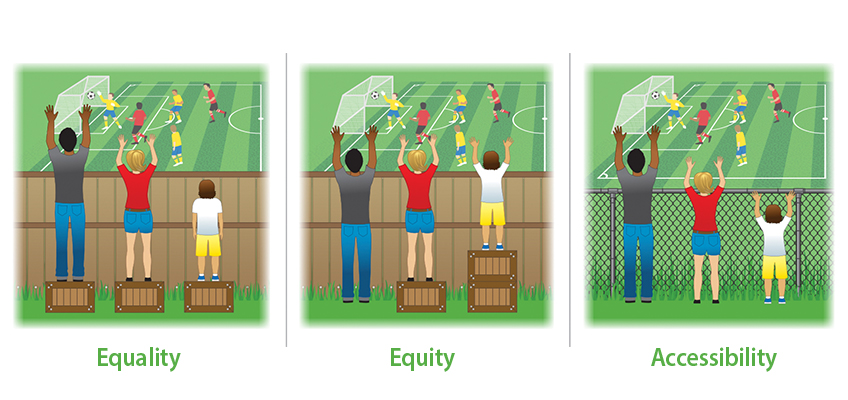
This photo above is one of my favorite pictures depicting how UDL works
Long gone are the days of plain pencil and paper assignments, long lectures and all independent reading.
With the advancement of technology comes the advancement of education as well. Now there are so many ways to get through to students who may have difficulties with learning. The concept UDL is an approach to learning and teaching that gives all students the equal opportunity to learn and succeed. Assistive technology really plays a vital role in how UDL works for students. Assistive technology comes in various forms and levels of assistance. The complete definition is any item, product or piece of equipment that is customized or modified to help improve functions of individuals with disabilities. One thing I have seen is that UDL and assistive technology can also work with different kinds of learners, not necessarily labeled someone with a "disability".
With my position at Chicago Public Schools being a SECA (special education classroom assistant), I heavily rely on tools associated with assistive technology. I have worked in many different classrooms and with many different students, all with different needs. I have never met two students that were exactly alike personality wise or academically. Currently, I am working with students who I have also worked with in two different years previously. The only difference is that these students are now teenagers and extremely up to date with technology. One of my students has dyslexia and a processing issue so being able to use her chrome book feature talk to text is really vital to her having independence. Some students just need something a bit smaller to help them succeed, like a pencil grip.
Here is a video I found neat that talks about what assistive tech is and why it is important in the classroom:
Video source: Youtube
Type Definition Examples Low-tech Devices that are readily available, inexpensive, and typically do not require batteries or electricity
- Specialized rubber pencil grip
- Page holder
- Modified scissors
Mid-tech Devices that are usually digital and may require batteries or another power source
- Calculator
- Audio book
- Digital recorder
High-tech Devices that are typically computer-based, likely to have sophisticated features, and can be tailored to the specific needs of an individual student
- Tablet
- Screen reader
- Voice recognition software
I really cannot wait to be able to use any and all resources available to my students when I get my own classroom. I enjoy finding new things that fit my student's needs but right now I do not have the autonomy to introduce new assistive technology to try. With the group of teacher's that I work with at the moment, collaboration is not the forte so it is hard to do much other than what I am told to do, despite having taken a 2 month class on UDL exclusively and wanting to introduce new ideas. I hope that apps keep flying into the laps on my students on their laptops, Chromebooks and Ipads. It really changes how they can communicate and learn.
It really is amazing how even a low-tech resource can have such a high impact on student learning. Thanks for sharing your experience.
ReplyDeleteRhiannon, I fully agree that assistive technology is so critical in providing accessibility for all students. I know in my own classroom that I use all kinds of assistive technology like visual schedules, apps on Chromebooks, audio books, math manipulatives, letter tiles, and more. Now, the amount of assistive technology does not compare to those teachers like you who work with students that need other tech such as communication apps or more individualized instruction. In my school, from what I have seen, our special education (Sped) department provides Sped students with their own iPad they can use at school to help them with their learning, communication, or academic/personal goal needs. Overall, I think that assistive technology is very beneficial for all students to be able to meet academic and/or social standards.
ReplyDelete